Trending Searches
The Dominance of Single-Brand Watch Boutiques: A Shifting Retail Landscape
Embracing Exclusivity: The Rise of Dedicated Brand Spaces
The Ascendance of Single-Brand Retail in Luxury Watches
In the dynamic world of watch retail, there's a distinct move towards mono-brand establishments. This strategy contrasts sharply with the multi-brand environments many consumers are accustomed to, where various timepieces can be easily compared side-by-side. Luxury watch manufacturers are increasingly opting for dedicated storefronts, immersing customers in a singular brand universe. This shift raises important questions about the evolving consumer experience and whether it truly benefits the watch enthusiast.
Insights into the Boutique Boom: A Data-Driven Perspective
A recent analysis by The Mercury Project, a Swiss firm specializing in the watch and jewelry retail sector, confirms the ongoing expansion of single-brand watch boutiques. Despite a challenging market in 2025, prominent brands continue to invest heavily in establishing new boutiques and revitalizing existing ones. This trend points to strategic growth patterns, both geographically and brand-specifically. Globally, 2025 saw 26 boutique openings, refurbishments, and relocations involving 17 major watch and jewelry brands. This activity signals a robust expansion fueled by a focus on experiential luxury, significant flagship investments, and broadening geographical reach. Brands that offer both watches and jewelry are particularly active, with Cartier leading the charge with 18 boutique projects, followed by Van Cleef & Arpels, Tiffany & Co., and Bvlgari, many of which are flagship stores.
Exclusive Horological Destinations
The watch-only segment is also experiencing considerable growth. IWC, for instance, inaugurated new single-brand outlets, including one in Taichung, Taiwan. Vacheron Constantin relocated its Seoul boutique, and Jaeger-LeCoultre undertook a major renovation of its store in Kuala Lumpur. Beyond the Richemont group, Breitling opened eight new locations, with three in China and one in Enschede, Netherlands. While there's a new boutique presence in smaller regional markets, the USA and Greater China remain crucial growth areas, accounting for 24 and 16 openings/renovations, respectively. Notably, U.S. expansion is concentrated in secondary markets and resort areas like Atlanta, Las Vegas, Austin, and Aspen, with fewer openings in primary retail hubs such as New York City, which did see new boutiques for Van Cleef & Arpels and Longines.
European Expansion and Global Accessibility
Europe's focus for 2025 has been on historic capitals such as Paris, Milan, Zurich, and London, marked by major flagship store renovations and relocations aimed at enhancing the luxury experience. A growing trend includes multi-floor stores on prestigious luxury streets, exemplified by Rolex's presence on Old Bond Street in London and Bvlgari's and Tiffany & Co.'s boutiques on Via Monte Napoleone in Milan. Looking ahead to 2026, the proliferation of single-brand boutiques is set to continue. Planned flagship stores for Audemars Piguet, Patek Philippe, and Rolex are anticipated on NYC's Fifth Avenue, and Tiffany & Co. on Rodeo Drive in Beverly Hills. There are also discussions about the first Rolex and Patek Philippe boutiques opening in Africa, specifically in Cape Town and Johannesburg. International travel will also offer more opportunities for luxury watch purchases, with Cartier opening a boutique at LAX and increased activity from Cartier, IWC, and Breitling on luxury cruise lines.
Crafting the Brand Narrative and the Consumer's Dilemma
Contemporary single-brand watch boutiques are designed to be comprehensive showcases for their products, including rare and limited editions, thereby offering a distinct advantage over multi-brand retailers. These spaces are meticulously crafted to embody the brand's vision, creating an immersive experience for the consumer. Examples include Patek Philippe's expansive, museum-like store in Hong Kong, complete with a private dining room, and Cartier's architecturally significant renovated flagship in Miami. IWC's Big Pilot Café in Bahrain further illustrates this trend of blending luxury retail with lifestyle experiences. However, the success of these ventures is not guaranteed, as evidenced by the Richemont Group's closure of 14 underperforming boutiques last year. This trend forces consumers into a brand-specific environment, limiting their ability to compare watches from different makers. While brands aim to create a "home away from home" atmosphere, complete with complimentary refreshments, it can sometimes feel like an obligation to purchase. The complete collection is often on display, but choices are confined to variations of a single brand's models rather than a diverse selection from competitors, making decision-making more complex.
The Watch Enthusiast's Perspective: Experience vs. Product
From a watch enthusiast's viewpoint, the allure of a perfectly themed store might not be the primary draw. The technical prowess, historical narrative, and reputation of a watch manufacturer often take precedence over elaborate retail decor. While a memorable buying experience is valued, it typically hinges on the attentiveness and expertise of the staff, coupled with the freedom to make a well-considered choice. Ultimately, it is the timepiece itself that will adorn the wrist, not the theatrical setting of the boutique. This brings into question the effectiveness of multi-brand stores. While the concept of comparing similar watches from different brands is appealing, its success depends on knowledgeable and unbiased sales associates. The risk of staff pushing for "easy sales" rather than guiding customers toward the best fit is a concern. Considering these factors, where would you prefer to conduct your watch shopping?
Related Articles
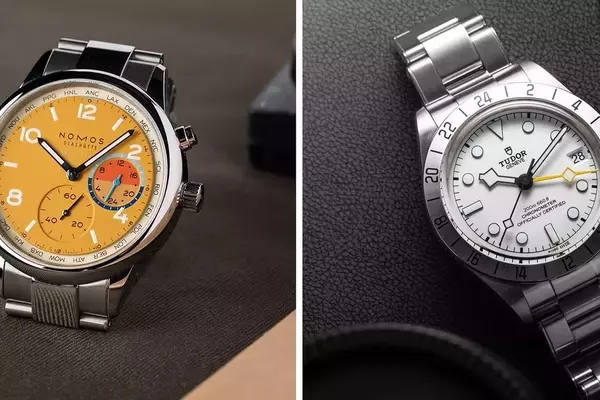
Nomos Club Sport Neomatik Worldtimer vs. Tudor Black Bay Pro: A Travel Watch Showdown

A Child's Perspective on 'About Time: A Children's Guide To The History And Science Of Time'