Trending Searches
Jaeger-LeCoultre's Master Control Chronometre Perpetual Calendar: A Modern Classic Emerges
Jaeger-LeCoultre marks its return to the integrated bracelet watch segment with the new Master Control Chronometre Perpetual Calendar. This timepiece blends historical design influences with modern sensibilities, presenting a sophisticated option in an increasingly competitive market. Available in steel with a blue dial or pink gold with a brown dial, the watch aims to stand out with its slim profile and balanced perpetual calendar display, powered by the renowned Caliber 868 movement. Its comfortable fit and elegant design, rooted in the brand's heritage, position it as a significant release.
While some might see Jaeger-LeCoultre's entry into the integrated bracelet trend as following suit, the brand's historical contributions to this design type are undeniable. The iconic Caliber 920 ébauche, a product of Jaeger-LeCoultre, served as the engine for seminal timepieces like the Audemars Piguet Royal Oak and the Patek Philippe Nautilus in the 1970s. These models were pivotal in popularizing the sleek, integrated-bracelet aesthetic. Furthermore, Jaeger-LeCoultre itself pioneered the Master Mariner Chronomètre in 1973, a watch that skillfully combined dress and sport elements with its steel case and integrated bracelet, serving as a direct antecedent for the current Master Control Chronometre collection.
The Master Control Chronometre Perpetual Calendar is presented in two distinct material and color combinations. One features a stainless steel case paired with a captivating blue sunray-brushed dial, offering a contemporary and versatile appeal. The other, more luxurious variant, is crafted entirely from pink gold and showcases a rich toffee-brown sunray-brushed dial. Despite its advanced perpetual calendar complication, the watch maintains a remarkably slender profile, measuring 39mm in diameter and a mere 9.2mm in thickness. This slimness greatly enhances wearability, ensuring the watch sits comfortably and securely on the wrist without the top-heavy sensation often associated with complex timepieces. The case design further contributes to this comfort, employing gentle curves and seamless transitions between the lugs and case flanks, allowing the watch to adapt organically to the wearer's wrist.
The bracelet's design is equally meticulous, drawing inspiration from Jaeger-LeCoultre's signature dauphine hands. Its faceted links echo these elegant shapes, imbuing the bracelet with a distinctive yet familiar character. The construction prioritizes comfort and fluidity; despite the internal placement of connection screws, the exceptional finishing of each component ensures a smooth, uninterrupted flow from the case to the bracelet, eliminating any sharp edges or awkward junctions.
The perpetual calendar display employs a classic four-register layout, presenting the month and year at 12 o'clock, the day at 3 o'clock, the date at 9 o'clock, and the moon phase at 6 o'clock. This arrangement achieves a remarkable degree of symmetry and balance, making the complex information surprisingly intuitive to read. A notable feature is the safety indicator positioned above the hands, a characteristic element of many JLC Master perpetual calendars. This indicator alerts the wearer when it is unsafe to adjust the calendar, a theoretically useful function, though its presence might suggest a desire for a more modernized movement that wouldn't necessitate such a warning.
The watch is powered by Jaeger-LeCoultre's Caliber 868, a self-winding perpetual calendar movement with a long-standing reputation. Its slender 4.72mm thickness is a key factor in the watch's overall svelte profile. Visible through the sapphire caseback, the movement boasts a 70-hour power reserve and operates at 4 Hz. The caseback also features the new Jaeger-LeCoultre High Precision Guarantee (HPG) seal, an in-house certification that rigorously tests the fully assembled watch under real-world conditions, including shocks, altitude changes, temperature variations, and positional shifts, going beyond mere movement testing.
Interaction with the watch remains user-friendly, with the crown serving as the primary control point. A single recessed corrector on the left side of the case simplifies calendar adjustments, a welcome departure from the multi-pusher systems often found on traditional perpetual calendars. This streamlined approach makes the intricate complication more accessible to the wearer.
This latest offering from Jaeger-LeCoultre represents a compelling addition to their collection. The watch is sleek, with attractive color schemes, and despite its recent introduction, it seamlessly integrates into the established Master Control series. It stands as a contemporary and refined alternative to the more classical Master Ultra Thin Perpetual Calendar models. While Jaeger-LeCoultre may be a latecomer to the modern integrated bracelet trend, the outcome is undeniably impressive, giving the impression that this design has always been a part of their heritage.
Related Articles

Watch World Showdown: Jaeger-LeCoultre Master Control Chronometre Perpetual Calendar Versus IWC Ingenieur Perpetual Calendar 41
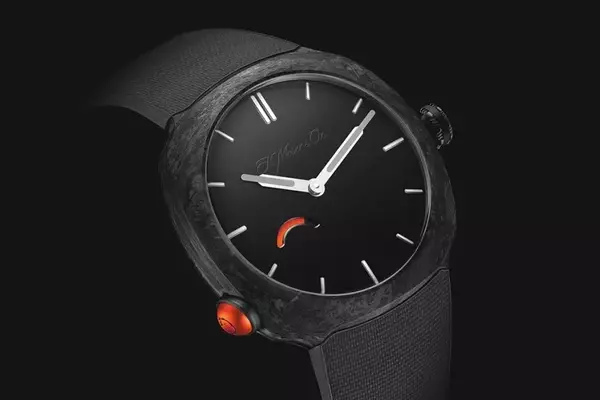
H. Moser & Cie.'s Newest Watch Incorporates Reebok's '90s-Era Pump Technology