Trending Searches
Missed Potential: The Underutilized 'Bewilder Bird' in Yoshi's Latest Adventure

"Yoshi and the Mysterious Book" presents itself as a delightful journey filled with imaginative characters and environments. However, beneath its endearing facade lies a core issue: a repetitive and overly simplified game structure that ultimately constrains its potential. A particularly innovative feature, the 'Bewilder Bird,' which enables Yoshi to mimic any encountered creature, briefly unlocks a world of creative possibilities. Yet, the game's failure to fully integrate and expand upon this dynamic mechanic beyond a single chapter leaves players with a feeling of disappointment, underscoring a significant missed opportunity for a truly groundbreaking experience.
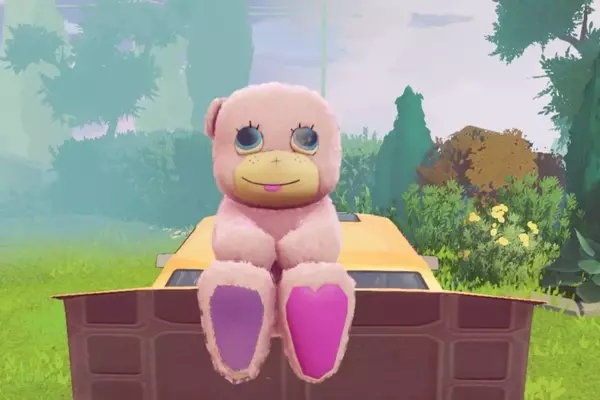
Initially, the game offers a pleasant, albeit predictable, experience. Players encounter various unique creatures, each granting Yoshi specific traversal or puzzle-solving abilities. For instance, the 'Snurfboard' allows swift movement across water, while the 'Swirm' provides catapult-like jumps, and the 'Stickiwick' facilitates swinging across gaps. Each level is meticulously crafted around these individual creature powers, leading to a somewhat guided and at times monotonous progression. This design, while functional, limits spontaneous exploration and experimentation, pushing players into a predetermined rhythm of discovery and application.
The narrative arc builds towards the pursuit of the 'Bewilder Bird,' a creature with the extraordinary power to morph into any other animal Yoshi has previously befriended. The moment of its discovery in World 6 is depicted as a transformative revelation for the gameplay. It suggests an evolution from a structured tutorial into an expansive sandbox, where players can freely combine abilities to overcome challenges. The article describes how this newfound freedom allows for diverse approaches to obstacles, such as navigating a waterfall by either using the 'Glubbit' to create floating bubbles or the 'Goonie' for aerial ascents, and then exploring water bodies with the 'Snurfboard' or 'Bafloonder' to uncover hidden secrets.
This fleeting period of creative liberation, likened by some to the expansive problem-solving of 'Breath of the Wild,' tragically lasts for only a single level. Following World 6, the game reverts to its initial formula, where new creatures are introduced with singular functions, effectively sidelining the immense potential of the 'Bewilder Bird.' This abrupt return to linear progression frustrates the reviewer, who laments the underutilization of such a compelling gameplay element. The article raises questions about the developer's decision-making, speculating whether time constraints or a desire to maintain simplicity for younger audiences led to this design choice.
The review concludes with a plea for future content, perhaps a downloadable expansion, that would fully embrace and develop the 'Bewilder Bird' mechanic. The author envisions large, open-ended levels that encourage boundless experimentation and creative solutions, transforming the game from a merely charming title into an unforgettable classic. The current state, with its brief glimpse of brilliance, serves only to highlight the game's unfulfilled potential, making its shortcomings all the more pronounced.