Trending Searches
Navigating the "Selective Normalization" in the 2026 Watch Industry
The luxury watch sector is currently undergoing a transformative period, characterized by a “selective normalization” that favors established brands with robust market presence and integrated retail strategies. This shift, thoroughly examined in Vontobel Equity Research's annual report, indicates a divergence in performance, with leading maisons regaining stability and growth, while many smaller entities grapple with diminishing volumes and heightened promotional pressures. The year 2026 is anticipated to continue this trend, lacking clear signs of widespread recovery across the entire industry, underscoring the importance of strategic portfolio selection for investors.
Jean-Philippe Bertschy, Head of Vontobel Equity Research, explains that “selective normalization” means the luxury watch sector isn't returning to uniform growth. Instead, normalization is primarily observed among brands with strong brand equity, integrated retail channels, and a dedicated customer base. These leaders are gradually aligning with their historical growth and margin standards. Conversely, a multitude of other players are still contending with reduced sales, limited foresight, and a more competitive promotional landscape. This implies that 2026 will bring a more predictable path for a select group of successful brands, rather than a broad recovery for the entire category. This necessitates a careful selection bias within investment portfolios.
The current market environment, marked by declining sales volumes but increasing value, poses a significant risk to segments of the watchmaking ecosystem. This dynamic, characterized by “fewer watches, but more expensive ones,” is sustainable and even advantageous for major integrated corporations and powerful brands that can assert their pricing authority and attract demand. However, this trend adversely affects entry-level and mid-range segments, along with subcontractors heavily reliant on volume. The Swiss watch industry is increasingly concentrating around a limited core of brands priced above CHF 500 and an oligopoly of leaders capturing the majority of market value.
The structural evolution of the watch market has resulted in an oligopoly, where roughly ten major brands command about 70% of production volumes and 80% of the global market share. This leaves a minimal share for the hundreds of other brands. Despite these challenging conditions, new brands, often with high price points, continue to emerge. Bertschy emphasizes that the core issue isn't an excess of brands but rather the extreme polarization between a handful of dominant players and a large number of structurally vulnerable labels. For many existing brands, the critical question is how long they can sustain a business model lacking critical mass or genuine desirability in a market where value is increasingly concentrated among a few global franchises.
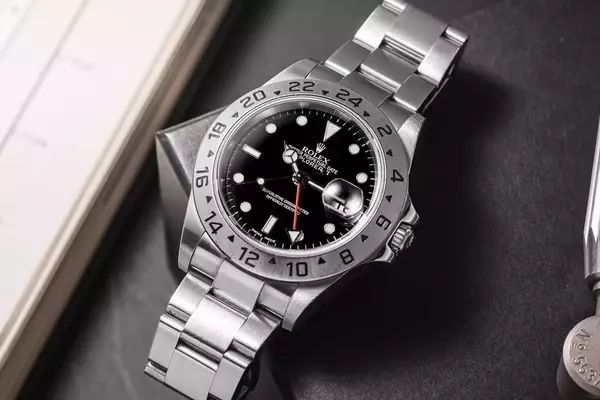
The growth of Rolex's Certified Pre-Owned (CPO) program, which generated an estimated CHF 500 million in 2025, is expected to continue its upward trajectory, albeit at a more normalized pace. This initiative plays a crucial role in the ecosystem by capturing a portion of the secondary market, stabilizing resale prices, and boosting confidence in authenticity. Future growth will be propelled by expanding networks, increased eligible inventory, and strong consumer demand for certified products. Eventually, the program's growth rate will converge to a more stable rhythm as it achieves critical mass.
The recent divestment of Baume & Mercier by Richemont, alongside discussions regarding a potential management buyout (MBO) of Jaeger-LeCoultre, suggests a broader strategic trend within the luxury industry. Major groups are re-evaluating their portfolios, prioritizing stronger assets and potentially shedding intermediate brands that lack critical size or a clear growth path. The branded jewelry market, being less saturated, offers significant growth opportunities, prompting groups to reinforce their focus on jewelry maisons. While LVMH might not divest brands like Zenith due to its strategic watchmaking ambitions, and Richemont is unlikely to part with Jaeger-LeCoultre given its strong heritage and high-end positioning, such movements signal a reallocation of capital towards more promising growth areas. However, any unexpected sale of a brand like Jaeger-LeCoultre would indicate a major strategic redirection for Richemont.
The market outlook for 2026 indicates a gradual recovery and selective normalization rather than a synchronized grand cycle. Mainland China is expected to stabilize, with demand driven by high-end products and engaged clients, moving past an era of double-digit rebounds. The United States will remain a crucial market, albeit with moderate growth and greater brand dispersion, as it moderates after several strong years. Europe is projected to remain sluggish, with resilient demand in major tourist hubs and among affluent local clientele, but a more challenging environment for secondary retailers. The Middle East maintains solid growth, supported by high-end consumers. India presents real long-term potential but faces regulatory and distribution challenges, making it a gradual growth relay rather than an immediate replacement for China.