Trending Searches
Swiss Watch Exports Face Significant Decline in November
The Swiss watch industry faced another challenging period in November, as exports continued their downward trend for the fourth consecutive month. A significant 7.3% year-over-year decrease was recorded, primarily influenced by fluctuating tariffs and varied global market performances. Despite some positive movements in certain regions, the overall outlook remains cautious, with industry experts closely monitoring future developments and hoping for a more favorable trend heading into the new year.
This article examines the detailed figures and market reactions to the November export data, analyzing the factors contributing to the decline and exploring the potential implications for the industry. It delves into the specific impacts of tariff adjustments on the crucial U.S. market, contrasts these with the performance in other key regions, and discusses the broader context of what has been a turbulent year for Swiss watch manufacturers. The analysis provides an in-depth look at the current state of affairs and the hopes for a rebound.
November's Export Performance and Tariff Impacts
Switzerland's watch sector witnessed a significant 7.3% decrease in exports during November, marking the fourth consecutive month of decline. This downturn, as reported by the Federation of the Swiss Watch Industry, was the most substantial since August, when the U.S. initially imposed a 39 percent tariff on Swiss products. Despite this tariff later being reduced to 15 percent, with retroactive application from mid-November, the industry continued to grapple with its repercussions. The total value of exports for the month stood at 2.2 billion francs (approximately $2.8 billion), with about 1.3 million watches shipped globally. The U.S. market experienced the most severe contraction, with exports plummeting by 52.3 percent, clearly illustrating the sensitivity of trade to tariff policies. Analysts, however, anticipate a potential recovery in exports following the tariff adjustment, suggesting a more optimistic outlook for the coming months.
The persistent decline in Swiss watch exports during November underscores the ongoing challenges faced by the industry, particularly in its critical U.S. market. The initial imposition of a 39 percent tariff by the U.S. government had a profound and immediate impact, leading to a sharp drop in demand. Although the tariff was subsequently lowered to 15 percent and applied retroactively, the market has yet to fully stabilize. This volatile trade environment highlights the vulnerability of luxury goods markets to international trade policies. While the UK and Singapore registered modest increases in Swiss watch imports—7.9 percent and 4.9 percent respectively—other major markets like Japan and China also showed declines of 4.1 percent and 3.2 percent. The decrease in demand for watches made from precious metals and steel, which fell by 4.9 percent and 9.3 percent, further contributed to the overall export slump, painting a complex picture of a global market navigating economic uncertainties and shifting consumer preferences.
Global Market Dynamics and Future Outlook
Beyond the U.S., the performance of Swiss watch exports across other international markets presented a mixed picture in November. While the United Kingdom and Singapore demonstrated resilience with increases of 7.9 percent and 4.9 percent respectively, key Asian markets like Japan and China experienced declines. Japan's exports fell by 4.1 percent, and China saw a 3.2 percent reduction. Conversely, Hong Kong recorded a 3.1 percent increase, offering a glimmer of positive news amidst the general slowdown. The challenges were not limited to geographical markets; specific product categories also struggled, with watches crafted from precious metals and steel witnessing drops of 4.9 percent and 9.3 percent, respectively. This broader market performance reflects a turbulent year for the Swiss watch industry, characterized by significant fluctuations. Hopes are now pinned on the December figures, which industry stakeholders anticipate will signal a more favorable trend as the market heads into 2026, potentially driven by the stabilization of trade policies and holiday season demand.
The global landscape for Swiss watch exports in November revealed a complex interplay of factors, with varying degrees of success across different regions. Despite the significant downturn in the U.S. due to tariffs, the modest growth observed in the UK and Singapore indicates localized demand resilience. However, the struggles in Japan and China, two traditionally strong markets, highlight broader economic pressures and changing consumer behaviors that extend beyond tariff impacts. The decline in specific watch materials, such as precious metals and steel, suggests a potential shift in consumer preferences or a general slowdown in high-end luxury purchases. This challenging year, marked by a substantial 16.4 percent dip in August alone, underscores the need for adaptability within the Swiss watch industry. As 2025 draws to a close, manufacturers and analysts are keenly awaiting the December export data, hoping it will provide a clearer and more optimistic trajectory for the upcoming year, signaling a potential recovery and renewed stability in the global watch market.
Related Articles
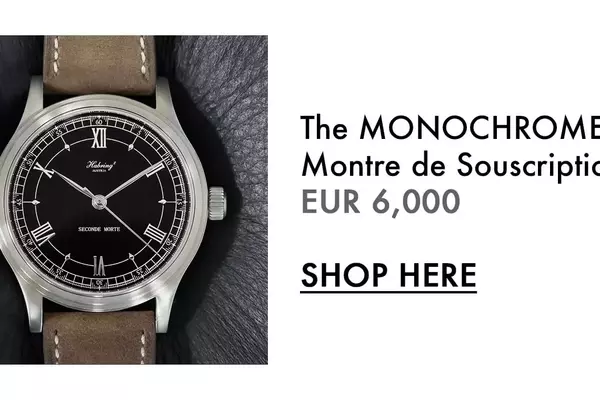
The MONOCHROME Montre de Souscription 4 Seconde Morte: A Fusion of Art Deco and Precision

Rado Captain Cook 39mm: A Perfectly Sized Dive Watch Blending Vintage Charm and Modern Appeal