Trending Searches
Vacheron Constantin's Twin Beat Perpetual Calendar: A Hands-On Review
When Vacheron Constantin first introduced the original Twin-Beat in 2019, I was not immersed in the horological world as I am today. My interests were also directed toward a vastly different price range – one that aligned with my personal budget, rather than the high-end segment that has since captivated my attention. Consequently, I overlooked its debut. It seems many others did as well. This particular timepiece, despite its groundbreaking initial release, was likely produced in limited quantities, and for over a year, rumors circulated about the impending re-release of the Twin-Beat. Now, it has arrived. It is refined. And indeed, in person, it is both captivating and truly remarkable. But what precisely is this creation?
Essentially, this timepiece utilizes two distinct balance wheels that oscillate at varying speeds, providing either a 4-day power reserve when operating at 5Hz, or an impressive 70-day reserve in a low-frequency standby mode of 1.2Hz. Furthermore, it incorporates a perpetual calendar complication. The technical intricacies were thoroughly examined in our previous coverage from 2019, so this discussion will concentrate primarily on the watch’s re-emergence as a refined model.
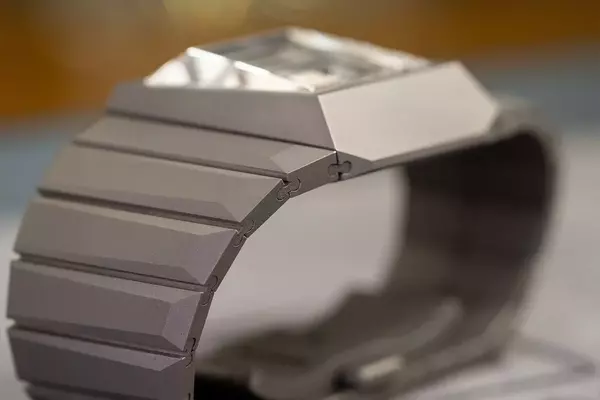
The technical innovation is paramount here, yet its physical design is equally striking. A perpetual calendar featuring dual balance wheels, housed in a 42mm case with a 12.3mm thickness, it possesses a substantial feel due to its platinum construction, but it wears remarkably well despite its complex mechanics. Vacheron Constantin often creates highly intricate timepieces that, regrettably, tend to be quite large. While this was not an issue in earlier eras (especially for brands like Patek Philippe, which dominated the high-end, integrated complication sector), modern standards now demand more compact dimensions.
Vacheron Constantin has skillfully designed the watch’s front to emphasize its technical complexity while maintaining excellent readability. Beyond the significant technical enhancements, there are subtle visual modifications compared to its initial version. Frankly, without both the new and old models side by side, I had to consult Vacheron Constantin for clarification on these specific details. The dial’s guilloché pattern is now subtly darker, and the subdials are described as having a more frosted finish, which enhances their legibility. A helpful public relations representative from the brand explained that these changes were all aimed at improving readability, a goal that the watch surprisingly achieves quite well, despite its partially open-worked dial design.
Observing it directly, you encounter most of the usual indicators found on any perpetual calendar. Notably absent is a day-of-the-week display, which might be convenient if, hypothetically, you were drafting this article on a Sunday, trying to get ahead of your work, and needed a reminder that it wasn't Monday yet, suggesting you should probably be watching television. The month, date, and leap year indications are exceptionally clear and appear to float effortlessly over the movement visible through the dial, seemingly without any underlying support.
When viewed at a slight angle, the sapphire dial supporting the displays and the aperture for the leap year become apparent. You can also discern the frosted finishing on the plates and the meticulous chamfering, which, though not exhibiting the artisanal flair of independent watchmaking, is nevertheless quite appealing. Crucially, the polished dauphine hands stand out prominently, ensuring clarity despite the potentially intricate nature of the dial.
At the 9:15 position on the dial and prominently at 12 o'clock, two features signal the watch's distinctive engineering. The left indicator reveals the operational mode of the timepiece, toggling between its two balance wheels. The upper subdial displays the two potential power reserves, corresponding to either the active or standby mode. Even with a four-day power reserve, it remains an impressive perpetual calendar. While setting a perpetual calendar can be cumbersome, the Twin Beat, with its extended 70-day power reserve in standby mode (an increase from 65 days in its predecessor), is arguably the most user-friendly perpetual calendar currently available on the market.
From the rear, the intricate mechanics are revealed. Starting at the top, as noted in our 2019 review, the watch incorporates two mainsprings housed within a single barrel. Each mainspring powers one of the two gear trains, essentially making the watch a dual-timepiece system. A differential mechanism allows one train to engage while the other disengages, with an imperceptible transition. Concurrently, a separate differential ensures that both mainsprings continue to unwind even if one gear train is inactive.
In the lower half of the movement, the two balance wheels are visible, neither of which is free-sprung. Given the slower beat rate of the right balance, at 1.2Hz, it is considerably larger than the standard 5Hz balance. Due to the significant inertia associated with this 1.2Hz movement, the brand has utilized a finer-gauge hairspring and a purple silicon escape wheel. As illustrated in the image below, the mode selector brakes have shifted to the right, disengaging the 1.2Hz balance and allowing the 5Hz balance to operate unimpeded. The anthracite bridges, featuring subtle interior angles, exhibit a futuristic aesthetic that distinguishes them from conventional high-end finishes.
The entire operation is remarkably smooth once the watch is running. However, upon receiving the sample directly from its packaging, it lacked power. After considerable winding, the watch eventually started. Yet, the 1.2Hz balance initially failed to engage. It became apparent that the watch required more than a day's worth of power to activate the 1.2Hz balance, after which it functioned flawlessly. Following this initial hurdle, I thoroughly enjoyed wearing the timepiece.
This was not my inaugural encounter with a Twin Beat model, but it marked my first experience with this enhanced iteration, and I was impressed, albeit in an unexpected way. The timepiece is extraordinarily cool, yet it possesses a certain subtlety. It flawlessly delivers on all its promises within a sophisticated design, and while its technical complexity is visually evident, it is also presented with restraint. The case design, for instance, offers more visual intrigue than many contemporary independent designs, which often appear generic and indistinguishable. Moreover, it is reassuring that the brand chose not to proceed with a version of an innovative concept that did not perform as intended—a testament to the advantages of purchasing from a well-established brand.
This is far from an everyday watch, with its 30-meter water resistance and a rumored price exceeding $350,000. However, the very essence of its "standby mode" negates the need for daily wear. Is it sufficiently appealing to overshadow the Overseas collection for the average consumer? Probably not. Yet, it arguably stands as Vacheron Constantin's most compelling demonstration of its expertise in high complications, largely due to its remarkable wearability.